Sarah F. Maloney
Au 107, ce que nous laissons à la forêt
Sarah F. MALONEY (Sept-îles)
Exposition, Terminé(e)
Du 23 octobre 2025 au 4 janvier 2026
Salle principale
Vernisage le 23 octobre 2025, 17:00
ENG will follow
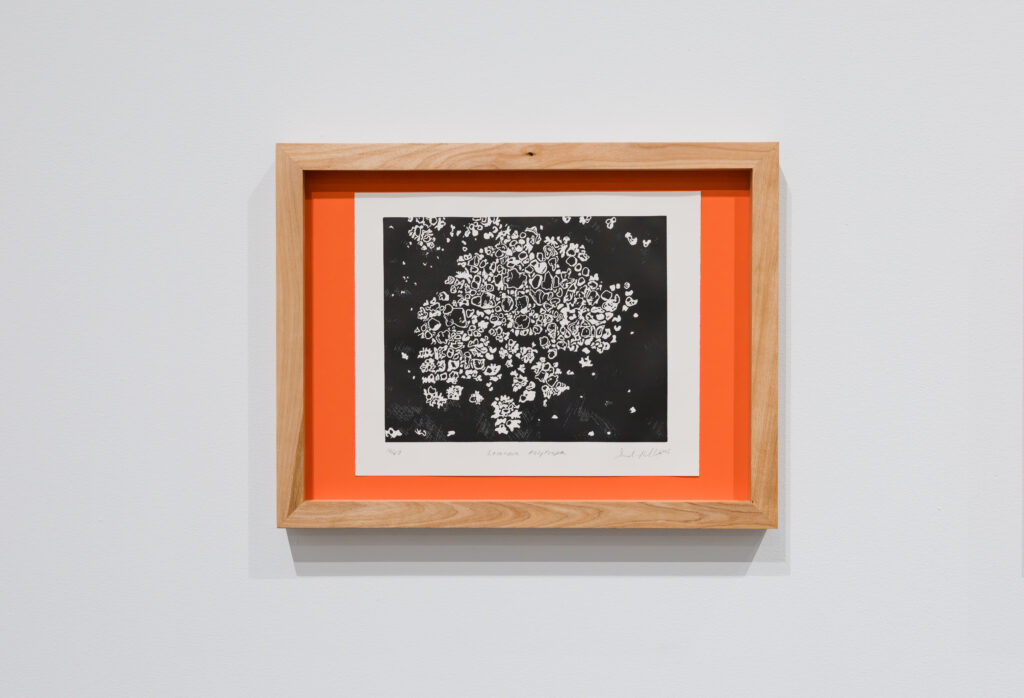
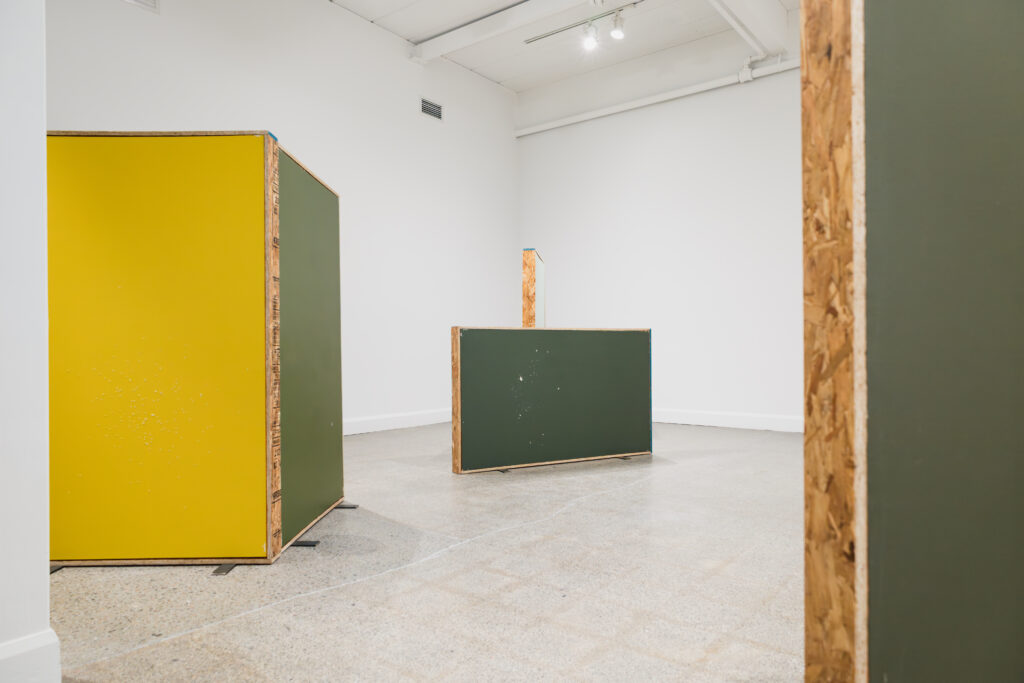
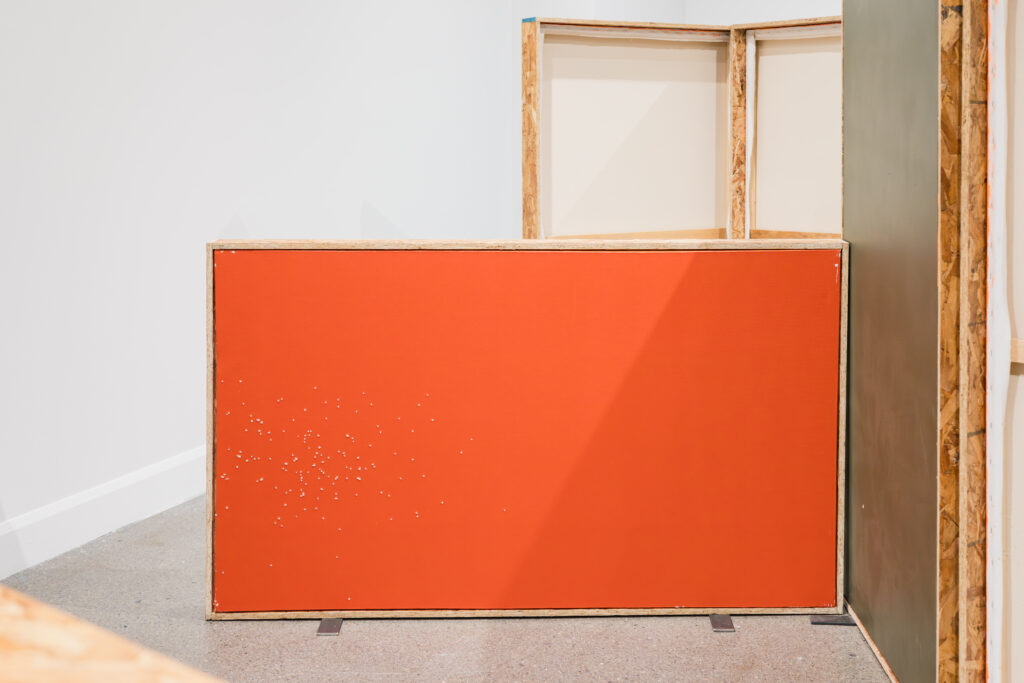
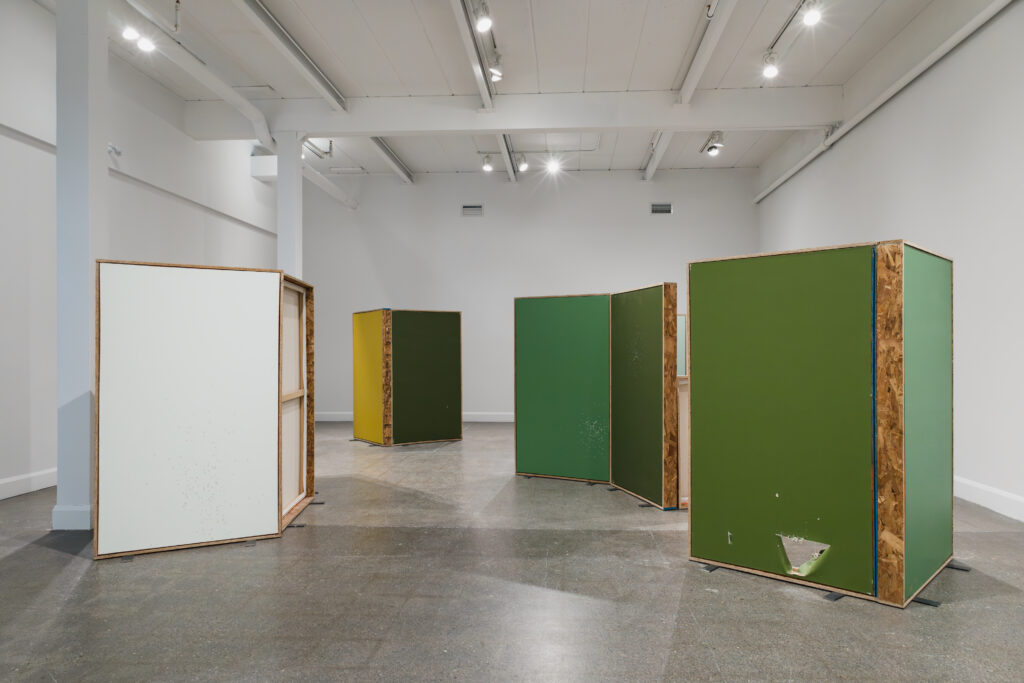
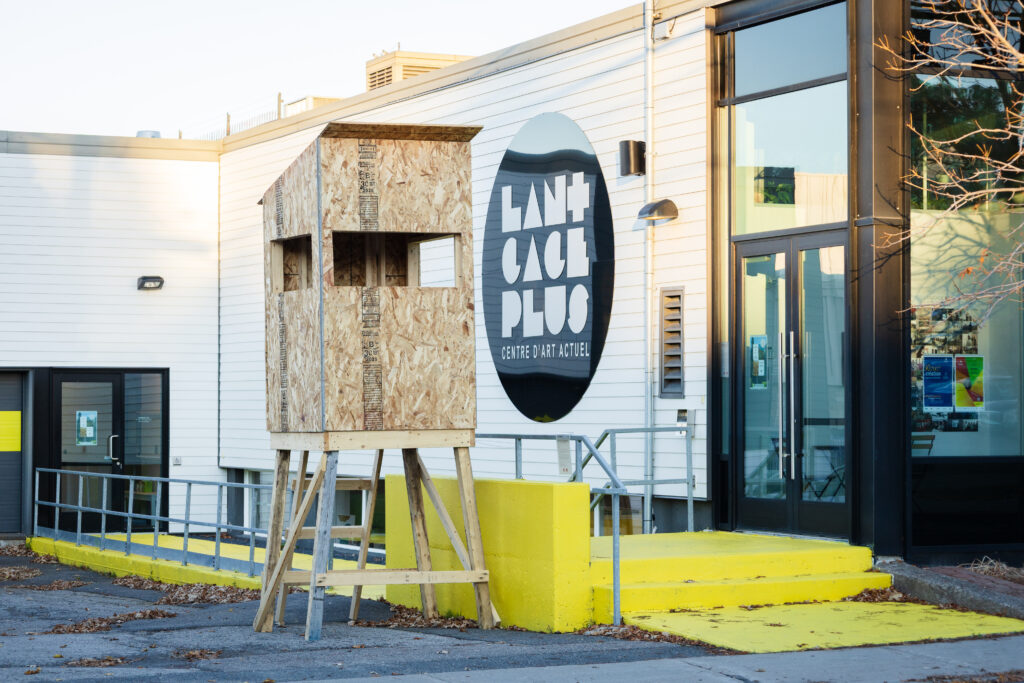
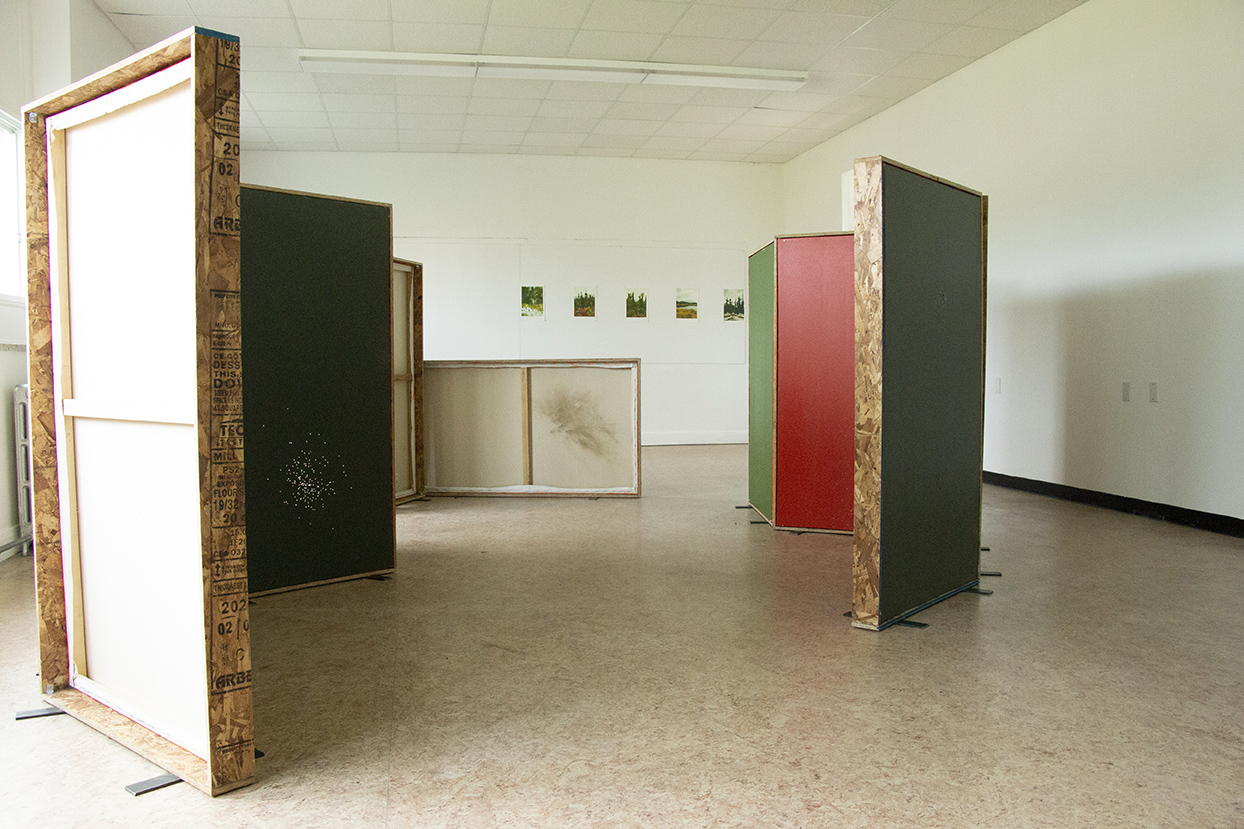
À l’automne 2014, Maloney entreprend une recherche immersive auprès d’un groupe de chasseurs d’orignal afin d’expérimenter, de l’intérieur, leur rapport à la forêt boréale. Au fil des jours, l’artiste observe et adopte leur gestuelle — une marche lente, lourde, presque animale — qui devient le cœur d’un geste performatif partagé. Cette expérience de l’attente, de l’écoute et du mimétisme nourrit une réflexion sur la lenteur et la perception, transposée plus tard dans le projet Evergreen (2017). L’artiste y explore la représentation artificielle du paysage à travers une série de tableaux aux tons « vert forêt », mis à l’épreuve dans un champ de tir. Sans correction oculaire, guidée par un chasseur, Maloney vise ces œuvres, testant les limites de sa vision et de la précision du geste. Entre errance et contemplation, Au 107, ce que nous laissons à la forêt interroge la posture du chasseur comme celle du regardeur d’art : un état d’attention suspendue au seuil du visible.
L’ARTISTE
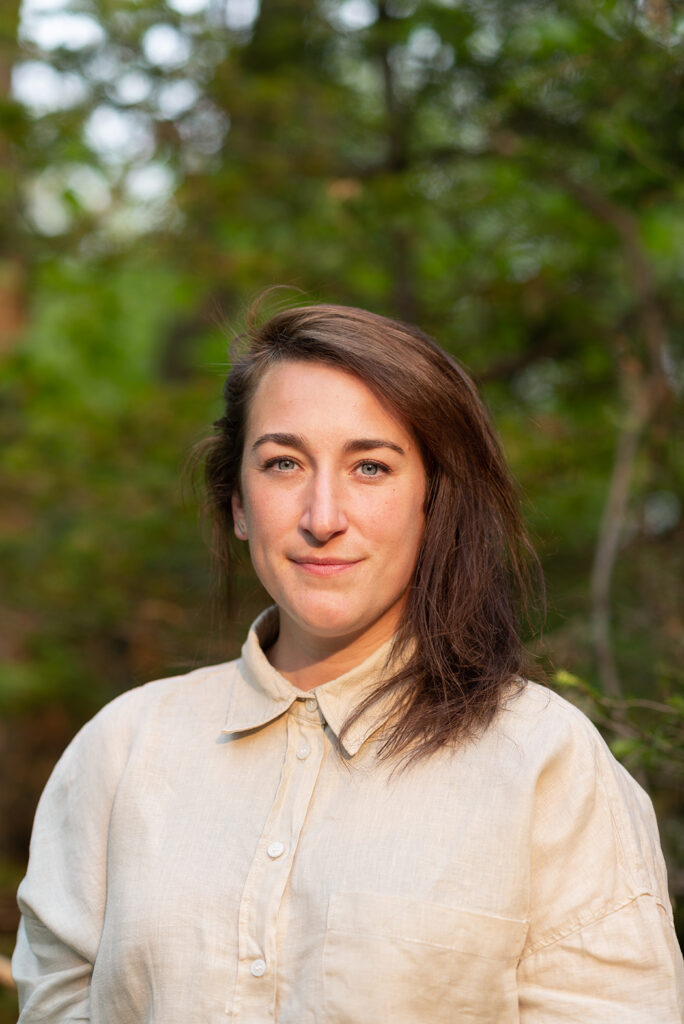
Titulaire d’un baccalauréat en arts visuels et en psychologie de l’Université Concordia (Montréal), Sarah F. Maloney obtient ensuite une maîtrise à la Glasgow School of Art (Écosse). Depuis, elle choisit de vivre au-delà du 50e parallèle, au cœur des territoires nordiques qui nourrissent sa démarche.
DÉMARCHE ARTISTIQUE
Son travail interroge les ramifications géopolitiques et symboliques de l’exploitation industrielle du territoire nord-côtier — notamment l’extraction du minerai de fer et la transformation de la forêt boréale. Inspirée par le « discours fondateur » de la Côte-Nord et par l’histoire des ouvriers et ouvrières ayant bâti son essor industriel, Maloney développe une pratique pluridisciplinaire ancrée dans la mémoire des lieux. À partir de matériaux issus de ces mêmes industries, elle élabore des œuvres qui résonnent comme des palimpsestes de voix et de matières, retraçant les récits humains et territoriaux qui composent l’imaginaire industriel du Nord québécois.
CAPSULE DÉCODEUR
Réalisée en 2025 par Jean-François Bourbeau, cette capsule est le fruit d’une collaboration avec Eckinox.
ENG version
Au 107, ce que nous laissons à la forêt
( At 107, what we leave to the forest)
In the fall of 2014, Maloney embarked on an immersive research project with a group of moose hunters, seeking to experience, from within, their relationship to the boreal forest. Over the course of several days, the artist observed and adopted their gestures, a slow, heavy, almost animal-like walk, which became the core of a shared performative act. This experience of waiting, listening, and mimicry nurtured a reflection on slowness and perception, later transposed into the project Evergreen (2017). Maloney explored the artificial representation of landscape through a series of forest-green paintings, tested within a shooting range. Without corrective lenses, guided by a hunter, she aimed at these works, testing the limits of her vision and the precision of her gesture. Between wandering and contemplation, At 107, what we leave to the forest examines the posture of the hunter as that of the art viewer — a state of suspended attention at the threshold of the visible.
THE ARTIST
Holding a Bachelor’s degree in Visual Arts and Psychology from Concordia University (Montreal), Sarah F. Maloney went on to complete a Master’s degree at the Glasgow School of Art (Scotland). Since then, she has chosen to live beyond the 50th parallel, in the heart of the northern territories that continually nourishes her practice.
ARTISTIC APPROACH
Her work probes the geopolitical and symbolic ramifications of industrial exploitation in Quebec’s North Shore region, particularly the extraction of iron ore and the transformation of the boreal forest. Drawing inspiration from the region’s “foundational narratives” and from the histories of the workers who built its industrial growth, Maloney develops a multidisciplinary practice rooted in the memory of place. Using materials derived from these very industries, she creates works that resonate as palimpsests of voices and matter, retracing the human and territorial stories that shape the industrial imaginary of northern Quebec.